
Music and movement
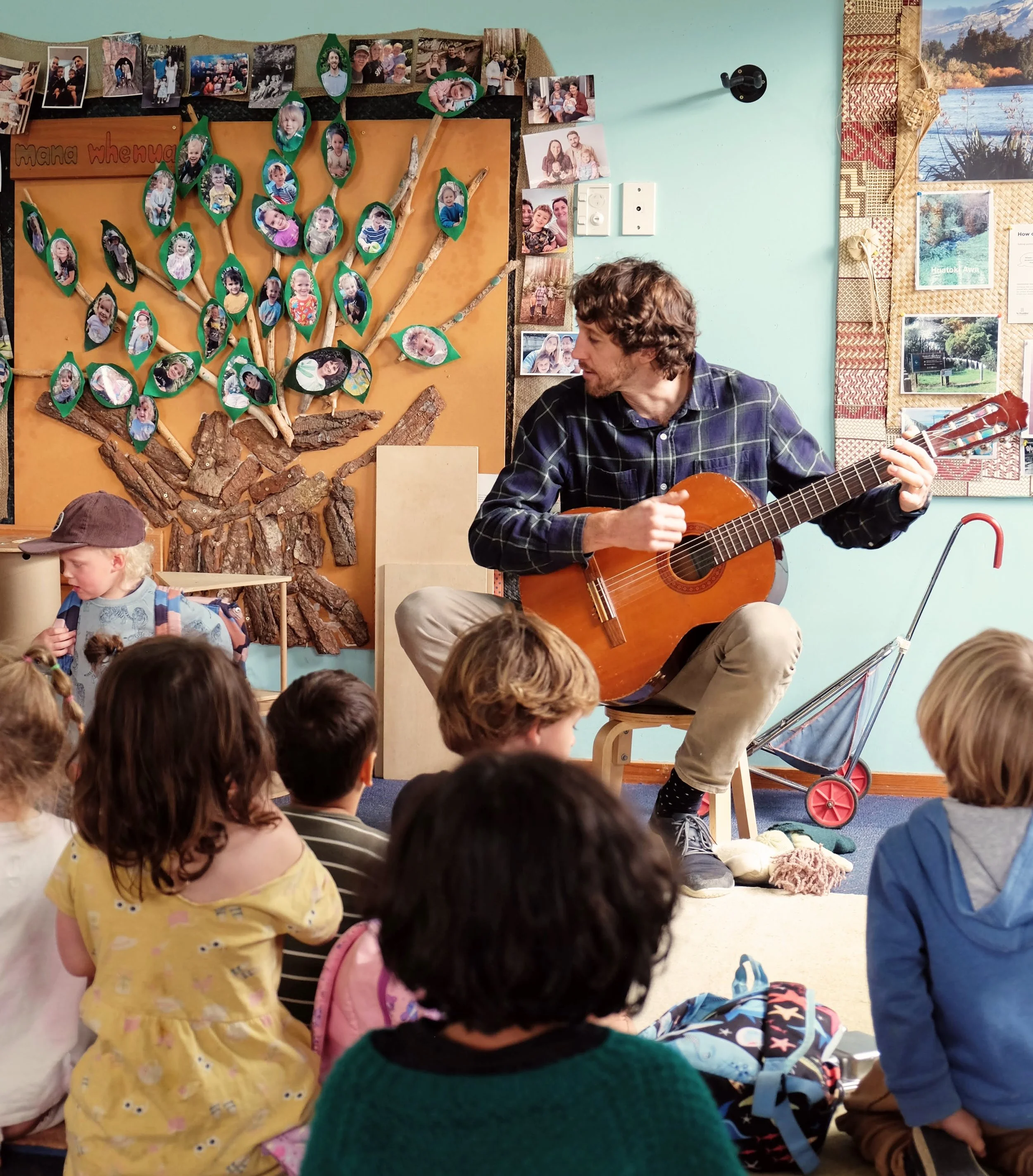
Music is an important part of our daily rhythm at kindergarten. Moving to music — through creative dance, body percussion or playing instruments — helps build physical coordination, body awareness, and rhythm. Group music times also support listening skills, turn-taking, and a sense of belonging.
Music plays a large role in emotional development — it helps tamariki to recognise and express feelings, and can support emotional regulation by calming or energising the body and mind. Regular exposure to music in the early years supports brain development, particularly in areas linked to language, memory, and pattern recognition.
We explore a wide range of musical styles, from traditional waiata to contemporary songs, and encourage all children to participate in ways that feel comfortable for them. Soft music is often playing as children arrive and during quieter parts of the day, creating a calm and welcoming atmosphere.